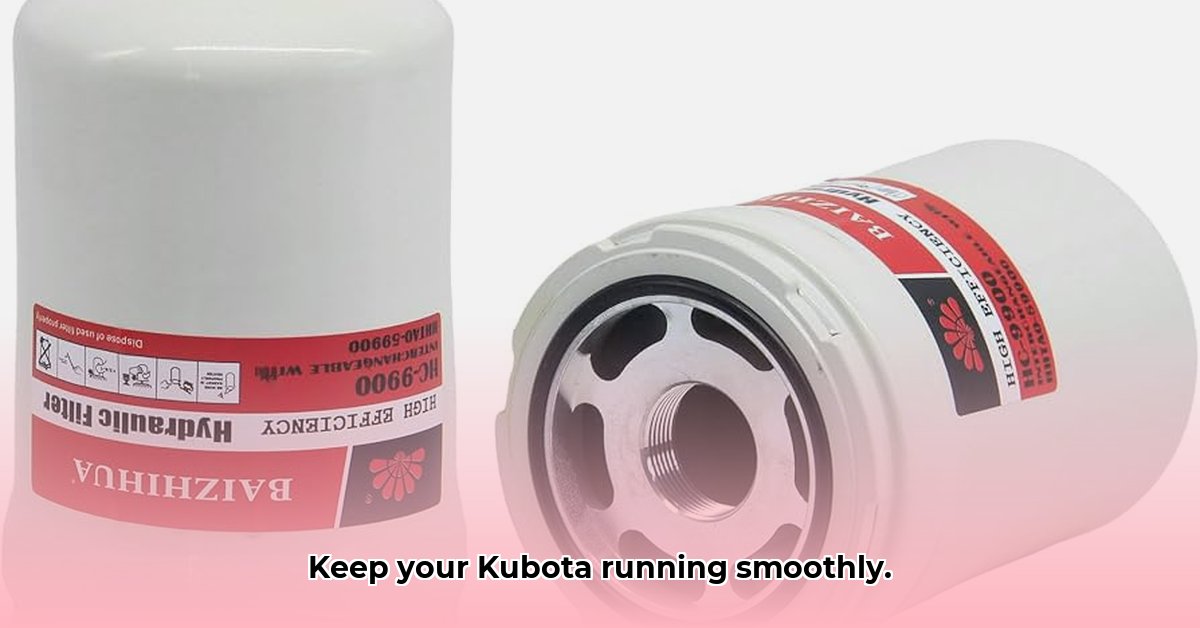
Maintaining your Kubota tractor's hydraulic system is crucial for both operational efficiency and sustainable farming practices. This guide focuses on the importance of proper hydraulic filter maintenance, specifically using genuine Kubota filters like the HHTA0-59900 and HHK70-14073, to maximize uptime, reduce fuel consumption, and minimize environmental impact. For more information on tractor hydraulic oil, see this helpful resource.
Understanding Kubota Hydraulic Filters
The HHTA0-59900 and HHK70-14073 hydraulic filters are essential components of your Kubota tractor's hydraulic system. They function as vital filtration units, removing contaminants (tiny particles of metal and debris) that can damage sensitive internal components. These contaminants arise from normal wear and tear within the hydraulic system. Using genuine Kubota filters is paramount because they are specifically engineered for your tractor model, ensuring optimal filtration and system performance. Using non-genuine filters might seem cost-effective initially, but the potential for poor filtration, leading to increased repair costs and equipment downtime, far outweighs any short-term savings. Don't risk compromising the efficiency of your valuable equipment with inferior substitutes.
Sustainable Agriculture Implications of Proper Filter Maintenance
Efficient hydraulic filter maintenance directly contributes to sustainable farming practices. By preventing hydraulic system failures through regular filter changes, you ensure prolonged tractor uptime, directly translating to increased productivity. This increased efficiency leads to reduced fuel consumption. Studies estimate that regular filter replacement can improve fuel efficiency by up to 5%, significantly lowering your carbon footprint and operating costs. Furthermore, extending the lifespan of your tractor through preventative maintenance minimizes the need for manufacturing replacement parts, conserving resources and reducing waste associated with the manufacturing process. Every year of extended equipment life is a victory for environmental sustainability.
The Sustainability Gap: Environmental Concerns and Actionable Steps
Despite the clear environmental benefits of proper filter maintenance, a significant information gap exists regarding the sustainability of the filters themselves. Currently, there is limited public information available regarding the specific materials used in Kubota's HHTA0-59900 and HHK70-14073 filters and their end-of-life recyclability. This lack of transparency prevents a complete evaluation of their full environmental impact. To address this, we need to take decisive action:
Directly Contact Kubota: Request detailed information on filter material composition, sourcing, and recommended disposal methods from Kubota. Demand transparency and accountability.
Advocate for Change: Encourage Kubota and other manufacturers to adopt more eco-friendly manufacturing practices and develop comprehensive recycling programs for used filters.
Responsible Disposal: Always adhere to local regulations for disposing of used hydraulic filters, seeking out recycling options where available.
Future Perspectives and Regulatory Considerations
The agricultural industry is likely to see increased regulatory pressure concerning the environmental impact of agricultural equipment and components. Future regulations will probably mandate more sustainable manufacturing processes and disposal methods for components like hydraulic filters. This necessitates proactive research and development of biodegradable or fully recyclable filter materials to minimize long-term environmental effects.
Actionable Steps for Sustainable Filter Management
This requires a collaborative effort from all stakeholders:
| Stakeholder | Short-Term Actions | Long-Term Actions |
|---|---|---|
| Farmers/Owners | Use genuine Kubota filters; dispose of used filters responsibly according to local regulations. | Advocate for more sustainable filter options; consider the full lifecycle environmental cost when purchasing. |
| Kubota | Publish complete data on filter material composition and recyclability; outline disposal guidelines. | Invest in R&D for biodegradable or fully recyclable filters; create a comprehensive recycling program. |
| Regulatory Bodies | Implement regulations mandating environmental impact assessments for agricultural equipment. | Develop policies supporting sustainable manufacturing and disposal practices across the agricultural sector. |
By prioritizing responsible filter maintenance and advocating for increased transparency and sustainability from manufacturers and regulatory bodies, we can collectively create a more environmentally responsible agricultural future. The future of sustainable farming depends on our collective actions today.